
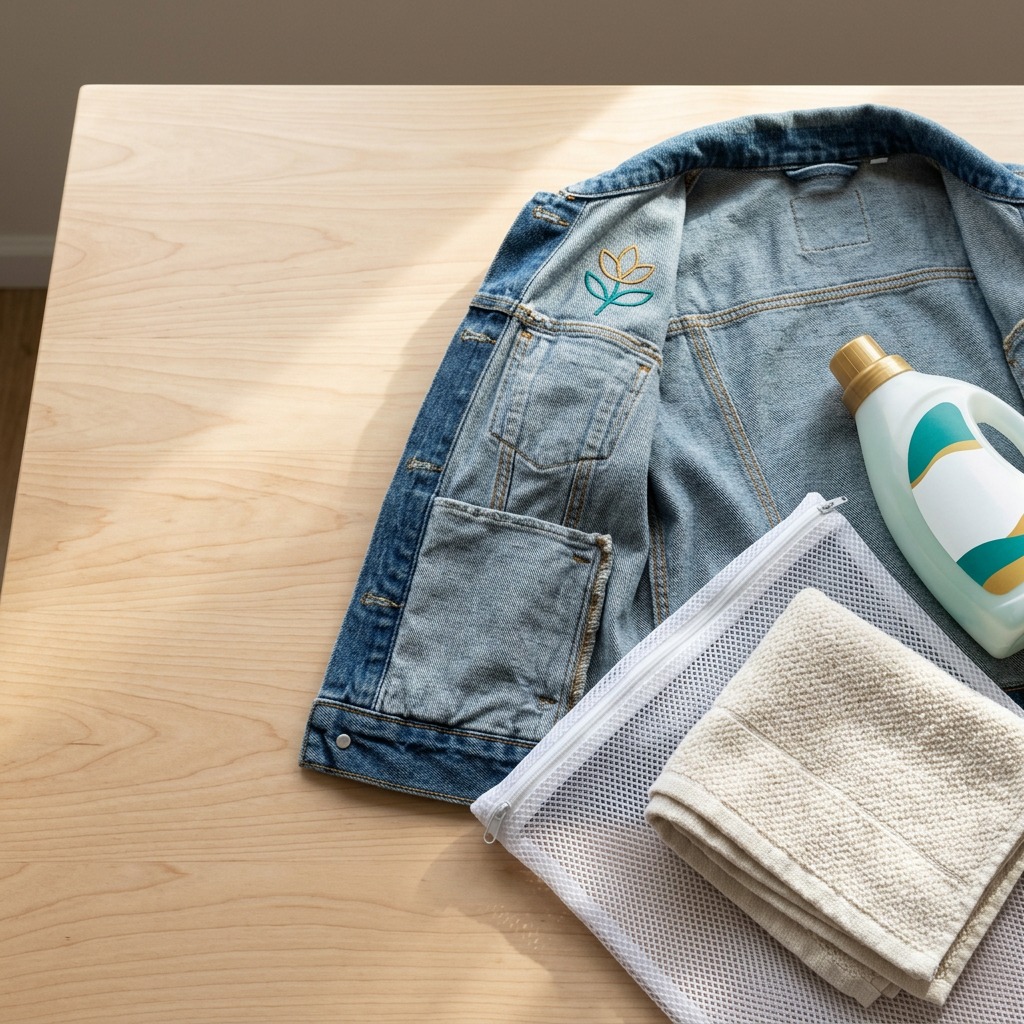
You spent time choosing the perfect patch, so the last thing you want is to see it peel, fade or fray in the washing machine. Knowing how to wash patches the right way keeps the colors bright, the edges tight and the backing firmly in place. This guide shows you how to wash patches in 8 safe steps, and explains what changes for embroidered, woven, PVC, leather and iron-on patches.
Check How Your Patch Is Attached
Before you learn how to wash patches, check how yours is attached, because the backing decides how careful you need to be:
- Sewn on: the strongest option. These patches can usually handle regular gentle washing.
- Iron-on only: the glue can weaken with heat and repeated washing. These need the most care.
- Iron-on and sewn: the glue holds the patch, and the stitches keep it secure.
- Velcro: you can simply remove the patch before washing.
If you want a patch that survives many washes and you are still learning how to wash patches safely, sew around the edge even if it has an iron-on backing.
How to Wash Patches: 8 Safe Steps
1. Remove the Patch If You Can
If the patch is on a Velcro backing, take it off before washing. This protects the patch and the loop panel on the item.
2. Read the Garment Care Label
The fabric the patch is on decides the maximum temperature. Follow the garment label first. If it says cold wash, use cold water.
3. Turn the Item Inside Out
When you turn the garment inside out, the patch faces inward and rubs less against other clothes and the drum. This single step protects most patches from snagging and fading.
4. Use a Mesh Laundry Bag
Place the item in a mesh bag. It stops the patch from catching on zips, buttons and other clothes.
5. Wash in Cold Water on a Gentle Cycle
Cold water and a gentle cycle protect the thread colors, the glue and the edges. Hot water can weaken iron-on glue and make colors run. (For general background on washing, see laundry.)
6. Use Mild Detergent and Skip Bleach
Choose a mild detergent. Avoid bleach and strong stain removers, because they can fade the thread and damage the backing. Do not use fabric softener on iron-on patches, since it can loosen the glue over time.
7. Air Dry Flat or Hang to Dry
Skip the tumble dryer, because high heat can lift iron-on patches and soften PVC patches. Lay the item flat or hang it in a shaded spot until it is fully dry.
8. Iron Carefully, If You Need To
If the item needs ironing, turn it inside out and iron from the back. If you must iron the front, place a thin cotton cloth over the patch and use medium heat for a few seconds. Never iron directly on a PVC patch.
How to Wash Each Patch Type
- Embroidered patches: durable and washable. This is the easiest type if you are new to how to wash patches. Follow the 8 steps above and avoid scrubbing the thread.
- Woven patches: also washable, with a flat finish and fine thread. Handle gently and avoid rough brushing.
- PVC patches: rubbery and water-resistant. Wipe them clean with a damp cloth and mild soap. Keep them away from high heat.
- Chenille patches: spot clean when possible, and avoid hard rubbing, because the fuzzy texture can flatten.
- Leather patches: do not soak. Wipe with a slightly damp cloth and let them dry naturally.
- Sublimated patches: printed in full color. Wash cold, inside out, and avoid direct ironing.
What to Do If a Patch Starts to Peel
If the edge of an iron-on patch lifts after washing, do not pull it. Lay the item flat, place a thin cotton cloth over the patch, and press with a warm iron for 30 to 45 seconds to reactivate the glue. Let it cool completely. To make it last, sew around the edge with a matching thread. Our guide on how to sew on a patch shows a simple stitch, and our iron-on guide helps you check if your fabric suits iron-on patches.
Quick Wash Routine You Can Copy
If you only remember one routine on how to wash patches, use this: turn the item inside out, put it in a mesh bag, wash cold on a gentle cycle with mild detergent, and air dry flat. Most patched jackets, jeans, caps and bags survive for years with this simple habit.
How Often Should You Wash Patched Items?
Wash patched items only when they are actually dirty. Jackets and denim often need washing far less than T-shirts. For a small mark, spot clean with a damp cloth and a drop of mild soap instead of washing the whole item. Every wash adds a little wear to the glue and thread, so less washing means longer-lasting patches. When you do need to know how to wash patches on a stained item, soak only the stained area and rinse gently.
Common Mistakes When Washing Patches
- Washing in hot water
- Using bleach or strong stain removers
- Putting patched items in a hot dryer
- Washing a patched item outside-facing with rough items like jeans and zips
- Scrubbing the patch with a hard brush
Choose Patches Made to Last
Knowing how to wash patches matters, but washing is also easier when the patch is made well. Choose the right backing for how you will use the item. Sew-on is best for items you wash often, and Velcro suits uniforms where patches are swapped. If you want to change a patch later, see our guide on how to remove a patch.
Oceans Patches makes embroidered, PVC, woven, chenille, leather and sublimated patches in your own design. The minimum order is 5 pieces, and every quote includes a free mockup before production, usually within 12 to 24 hours. Standard production takes 12 to 14 days after approval, and shipping is free worldwide, including the USA.
Request your free mockup or email sales@oceanspatches.com with your design, size, quantity and preferred backing.