
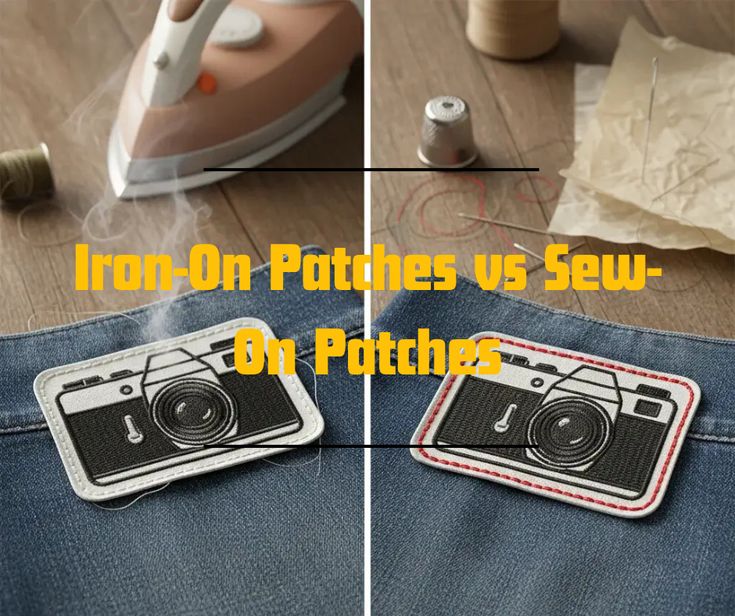
Iron-On vs Sew-On Patches: 5 Important Differences
Backing type is one of the smaller decisions in a custom patch order, but it’s also one of the easiest to get wrong. The iron-on vs sew-on patches question comes up on almost every quote, and picking the wrong one can mean a patch that falls off after a few washes or one that’s harder to remove than it needed to be.
Here are the 5 differences that actually matter when deciding between iron-on vs sew-on patches for your project.
1. How They Attach
Iron-on patches have a heat-activated adhesive backing. Press them with a household iron (or a heat press for larger runs), and the adhesive melts into the fabric, bonding the patch in place — no needle required.
Sew-on patches have a plain fabric backing and are attached using thread, either by hand or machine, stitching around the patch’s edge.
2. Durability Over Time
This is where the iron-on vs sew-on patches comparison really splits. Sew-on patches are generally more durable long-term — the stitching holds firm through repeated washing, stretching, and everyday wear. Iron-on adhesive can weaken over time, especially on fabric that gets washed often or stretches (like athletic wear), eventually causing edges to lift.
If the item will be washed frequently or needs to last for years, sew-on is usually the safer bet.
3. Application Effort
Iron-on is the clear winner for convenience. It takes a few minutes with a household iron and requires no sewing skill at all — ideal for parents, event organizers, or anyone applying patches themselves at home.
Sew-on requires either hand-stitching (slower, but doable by anyone patient enough) or a sewing machine. It takes longer, but the result is generally sturdier.
4. Fabric Compatibility
Iron-on adhesive doesn’t bond well to every material. Leather, nylon, certain technical or waterproof fabrics, and some synthetic blends either won’t hold the adhesive properly or can be damaged by the heat needed to apply it.
Sew-on patches work on nearly any fabric, since they don’t rely on heat or adhesive chemistry — just a needle and thread.
5. Removability
Iron-on patches are difficult to remove cleanly once applied — heat can loosen them again, but adhesive residue often remains. Sew-on patches can simply be unpicked with a seam ripper, making them the better choice if you expect to remove or reposition the patch later (seasonal uniforms, rental gear, or promotional items that get reused).
Quick Decision Guide
| Iron-On | Sew-On | |
|---|---|---|
| Best for | Quick application, cotton/polyester blends | Long-term durability, frequent washing |
| Application | Minutes, no skill needed | Requires stitching, more time |
| Fabric limits | Struggles with leather, nylon, technical fabric | Works on almost anything |
| Removable? | Difficult, leaves residue | Easy — unpick the stitching |
Which Should You Choose?
If you need something on quickly and the item won’t see heavy wear or frequent washing — a one-time event, a gift, a display item — iron-on is the practical choice. If the patch is going on a uniform, workwear, or anything that needs to survive years of washing and daily use, sew-on is worth the extra few minutes.
Still not sure which fits your specific fabric and use case? [Link this phrase to your Contact Us page: “Send us a quick message”] and we’ll recommend the right backing type for your order — free mockup included, no minimum order.34
It also helps to think about who will be applying the patch. If you’re handing out patches to parents, volunteers, or customers who’ll attach them at home, iron-on is far more forgiving — no sewing kit required, and most people already own an iron. But if you or your team are applying patches in bulk yourselves (uniforms, workwear, team jackets), the extra durability of sew-on is usually worth the slightly longer application time, especially for items that will be washed dozens of times over their lifespan.
3 Responses