
If you’ve started looking into embroidered vs woven patches fast you’ve probably run into this question fast: should you go with embroidered or woven? The two look similar in photos, cost roughly the same, and both attach the same way — so it’s easy to assume they’re interchangeable. They’re not, and picking the wrong one is one of the most common regrets first-time patch buyers have.
Here’s the short version: embroidered patches are built for bold, textured designs, while woven patches are built for fine detail and small text. The rest of this guide breaks down exactly why, so you can match the technique to your actual design instead of guessing.
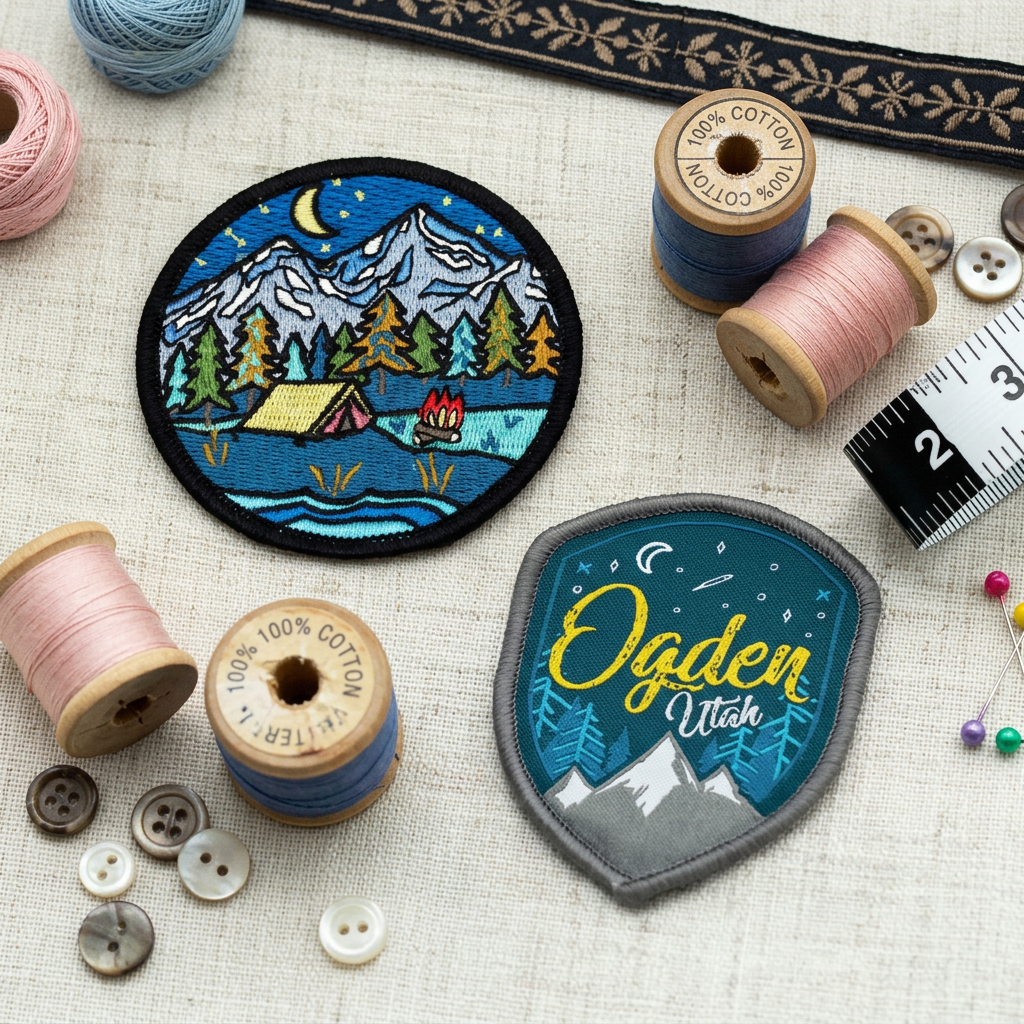
embroidered vs woven patches
What Embroidered Patches Are Best For
Embroidered patches are made by stitching thread directly into a backing fabric, building up your design line by line with a sewing machine. That stitching gives the patch its signature raised, textured look — you can literally feel the design with your finger, not just see it.
This technique shines with:
- Bold logos with thick outlines
- Large text and numbers
- Designs with fewer than 8-10 colors
- Anything meant to look substantial and traditional — think varsity jackets, uniforms, and classic team merchandise
The tradeoff is detail. Thread has width, so very fine lines, small text, or intricate artwork can blur together or “fill in” once stitched. If your design has small print or delicate linework, embroidery will round off those edges rather than reproduce them exactly.
What Woven Patches Are Best For
Woven patches are made differently — instead of stitching thread onto a backing, the entire patch is woven on a loom, similar to how a label or fine textile is made. That process allows a much tighter weave, which means woven patches can hold detail that embroidery physically can’t.
Woven patches are the better choice for:
- Small text that needs to stay legible
- Fine linework, thin outlines, or detailed logos
- Designs with subtle color gradients
- A flatter, lower-profile finish (useful on thinner fabrics or minimal designs)
Because the weave is so tight, woven patches also tend to look slightly more “printed” than embroidered ones — less raised texture, more precision. If your brand’s aesthetic leans clean and modern rather than textured and traditional, that’s often a point in woven’s favor too.
Side-by-Side Comparison
| Embroidered | Woven | |
|---|---|---|
| Best for | Bold designs, large text, logos | Small text, fine detail, gradients |
| Texture | Raised, tactile | Flat, smooth |
| Detail level | Moderate | High |
| Classic use case | Team jerseys, varsity jackets | Corporate branding, small labels |
| Cost | Comparable | Comparable |
| Durability | Very durable | Very durable |
Notice that cost and durability are essentially a wash — the real decision comes down to what your design actually needs, not price or longevity.
A Simple Way to Decide
Choosing between embroidered vs woven patches doesn’t have to be complicated. Ask yourself one question: does my design include small text or fine detail that needs to stay sharp?
- If yes — lean toward woven.
- If your design is mostly bold shapes, thick lettering, or a simple logo — embroidery will give you that classic, textured look and handle the design just fine.
If you’re still unsure, it often comes down to looking at your actual artwork next to both options — which is exactly what a mockup is for.
Don’t Guess — Get a Free Mockup First
The honest answer is that some designs work well either way, and the best way to know for sure is to see your specific logo or artwork rendered in both styles before committing to an order. That’s a big part of why we build a free mockup into every quote — you’re not choosing blind, and you’re not paying until you’ve seen exactly what you’ll get.
Send us your design, and we’ll tell you honestly which option — embroidered or woven — will represent it best, along with a free mockup so you can see it for yourself. No minimum order, and no pressure to pick before you’re ready. Still deciding between embroidered vs woven patches for your project? Send us your design and we’ll tell you honestly which option will represent it best.