
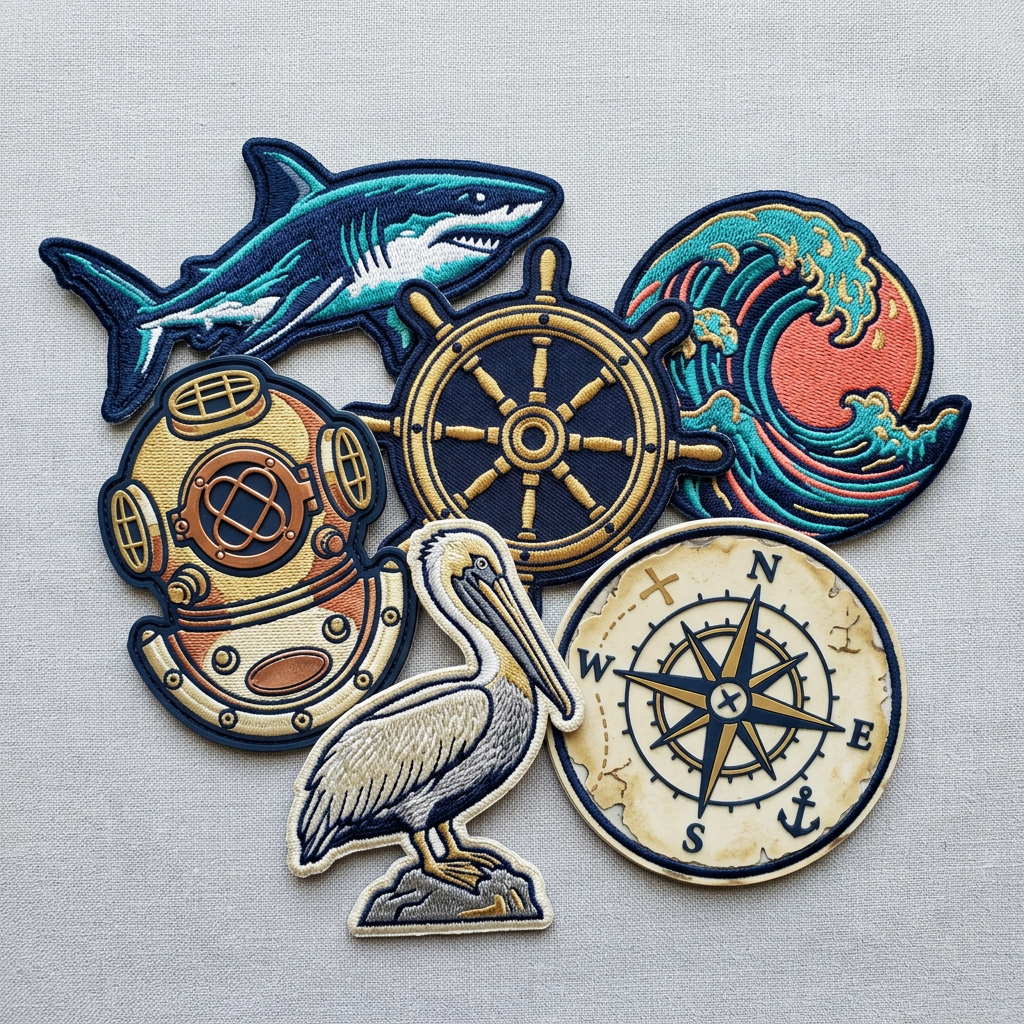
Ask five patch companies for a quote and you’ll often get five different answers, with no clear explanation of why. Understanding what actually drives custom patches cost makes it much easier to read a quote and know whether it’s fair — instead of just trusting the number you’re given.
Here’s the quick answer: small to mid-sized custom patches typically run anywhere from about $1 to $5 per piece, with the price per unit dropping as quantity increases. That range is wide on purpose — the 7 factors below explain exactly why your specific order might land higher or lower.
1. Patch Type
The single biggest driver of custom patches cost is which manufacturing method you choose:
- Embroidered — mid-range cost, the most common option
- Woven — similar to embroidered, sometimes slightly less for simple designs
- PVC (rubber) — moderate cost, higher for multi-layer 3D designs
- Chenille — typically higher due to thicker yarn and labor-intensive construction
- Leather — higher cost, especially with engraved or laser-cut detail
- Sublimated — cost scales with color complexity rather than the technique itself
2. Size
Larger patches use more material and more production time, so price increases with size — usually calculated per square inch or across standard size tiers.
3. Quantity
This is the biggest single lever on your final custom patches cost per unit. Setup costs get spread across more pieces as order volume grows, so a 500-piece order will almost always have a noticeably lower per-unit price than a 20-piece order of the same design.
4. Number of Colors
More colors usually mean more thread changes or more complex tooling — particularly for embroidered and PVC patches. Simpler, fewer-color designs are typically the more economical choice.
5. Backing Type
Iron-on, sew-on, Velcro, and adhesive backings each carry a slightly different cost to add. Velcro, for instance, usually adds a small premium because it requires an extra component — the hook-and-loop pair.
6. Border and Finishing
Merrowed borders, laser-cut edges, and specialty finishing touches can add a small amount per unit compared to a basic cut edge.
7. Hidden Fees (the factor that catches people off guard)
This is where a lot of first-time buyers get surprised. A low headline price sometimes hides extra charges that appear later — digitizing fees, setup fees, mold fees for PVC, or rush fees that only show up once you’re already committed to the order. By the time those get added, the “cheap” quote often isn’t cheap anymore.
The way to avoid this: ask for an itemized quote before approving anything, and confirm in writing that the number you see is the number you’ll pay.
Quick Comparison by Patch Type
| Patch Type | Relative Cost | Best For |
|---|---|---|
| Embroidered | $ – $$ | Bold logos, classic look |
| Woven | $ – $$ | Fine detail, small text |
| PVC | $$ | Outdoor gear, bold color |
| Chenille | – $ | Varsity-style branding |
| Leather | $$$ | Premium headwear/apparel |
| Sublimated | – $ | Full-color, photo-style art |
How to Get an Accurate Custom Patches Cost Fast
The fastest way to get a real number instead of a rough estimate is to send over:
- Your design or logo (even a rough sketch works)
- The approximate size you need
- The quantity you’re considering
- Your preferred backing type, if you know it
With those four details, a proper quote can usually be put together within 24 hours — broken down by exactly what you’re paying for, with nothing added later.
Get a Free, Itemized Quote
Understanding your real custom patches cost shouldn’t require guesswork. [Link this phrase to your Bulk Orders page: “request a free quote“] and we’ll get back to you with an itemized number within 24 hours — no minimum order, whether you need a handful of [link “custom embroidered patches” to your Embroidery product page] or a few thousand pieces.