
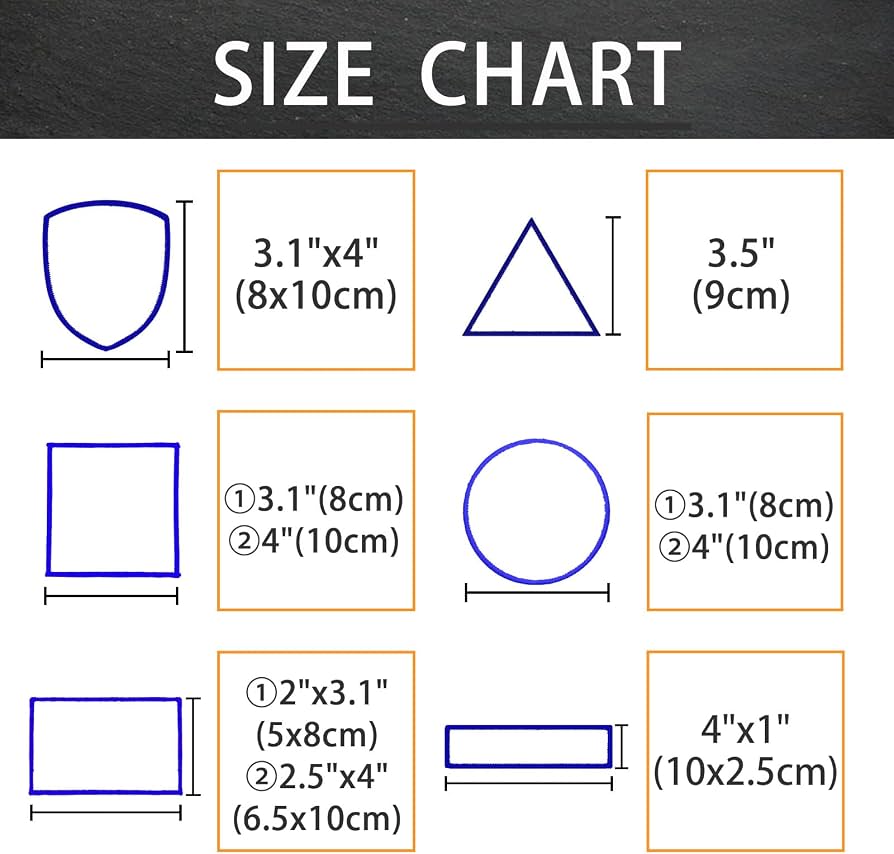
Choosing the right custom patch size is one of the most important decisions you make before you order. A patch that is too small loses its detail, and a patch that is too large looks out of place on the item. This guide shows the best custom patch size for six common placements, and how your design and patch type change the size you need.
Why Custom Patch Size Matters
The size of a patch affects three things: how readable the design is, how the patch looks on the item, and how much it costs. A larger patch uses more thread or material, so the price goes up with size. A smaller patch can look neat, but only if the design is simple enough to fit.
Before you pick a custom patch size, decide where the patch will go. The placement sets the natural limits, and the sections below show typical sizes for each one. These are general guides, and we confirm the exact size on your free mockup.
1. Hats and Caps
The front panel of a cap is small, so a custom patch size of about 2 to 2.5 inches tall and 3 to 4 inches wide works well. Keep the design bold, with short text or a single logo. On a curved hat, a patch that is too wide can sit unevenly.
2. Chest and Pocket
For a left-chest logo on a shirt, polo or uniform, a custom patch size of about 3 to 4 inches wide is the most common choice. It is large enough to read from a short distance, and small enough to look professional. Our embroidery patches work especially well in this range.
3. Sleeves
Sleeve patches are usually smaller, from about 2 to 3 inches. They suit team names, years, ranks and achievements. Because sleeve space is limited, simple shapes and short text give the best result.
4. Bags and Backpacks
Bags give you more room, so a custom patch size of about 3 to 4 inches is a good start, and larger designs can work too. These patches are handled often, so durable options such as PVC patches are popular for bags and outdoor gear.
5. Jacket Backs
The back of a jacket is the biggest canvas. A custom patch size of about 10 to 12 inches wide is typical for team names, club logos and large artwork. This is where chenille patches look best, because the thick, raised yarn needs space to show the shape.
6. Name Patches and Small Badges
Name patches and small badges are usually about 1 to 1.5 inches tall and 3 to 4 inches wide. At this custom patch size, the text must be short and clear. If you need very fine lettering, a woven patch is often the better choice.
How Detail and Patch Type Affect Size
Your design decides the minimum custom patch size, not only the placement. As a general guide:
- Embroidered patches: text should be at least about 0.25 inch (6 mm) tall, and lines should not be too thin. Smaller text can fill in and become hard to read.
- Woven patches: the thread is finer, so they can show smaller text and more detail at the same size.
- Chenille patches: these need larger sizes because of the thick yarn. Letters and shapes should be big and simple.
- PVC patches: these hold sharp edges and bold shapes well, but very small details are harder to show.
Not sure which type suits your design? Our comparison of embroidered vs woven patches explains the difference. You can also read more about embroidery and how stitching works.
How to Check Your Custom Patch Size Before You Order
- Measure the space. Measure the area on the item, and leave a small margin around the patch.
- Cut a paper template. Print or cut a paper shape at the size you are considering, and hold it on the item.
- Check the text. Make sure the smallest text is still easy to read at normal viewing distance.
- Think about the backing. Larger and heavier patches usually suit sew-on backing. Read our guide to the best backing for custom patches.
- Ask for a mockup. A mockup shows the real proportions before anything is made.
Common Mistakes With Custom Patch Size
- Going too small for the design. Fine details and small text get lost.
- Going too large for the item. A patch that overpowers the item looks unbalanced.
- Ignoring the curve. On caps and bags, a flat, wide patch can sit unevenly.
- Forgetting the budget. A bigger custom patch size costs more, so check our guide to custom patches cost.
- Skipping the mockup. Always check the proportions before you approve.
If you are still planning your design, our guide on how to design a custom patch can help.
Get Your Custom Patch Size Right With a Free Mockup
Oceans Patches makes embroidered, PVC, woven, chenille, leather and sublimated patches. The minimum order is 5 pieces, and every quote includes a free mockup, usually within 12 to 24 hours. Nothing goes into production until you approve it. For larger orders, visit our bulk orders page.
Request your free mockup or email sales@oceanspatches.com with your design, placement and quantity, and we will recommend the best size for you.