
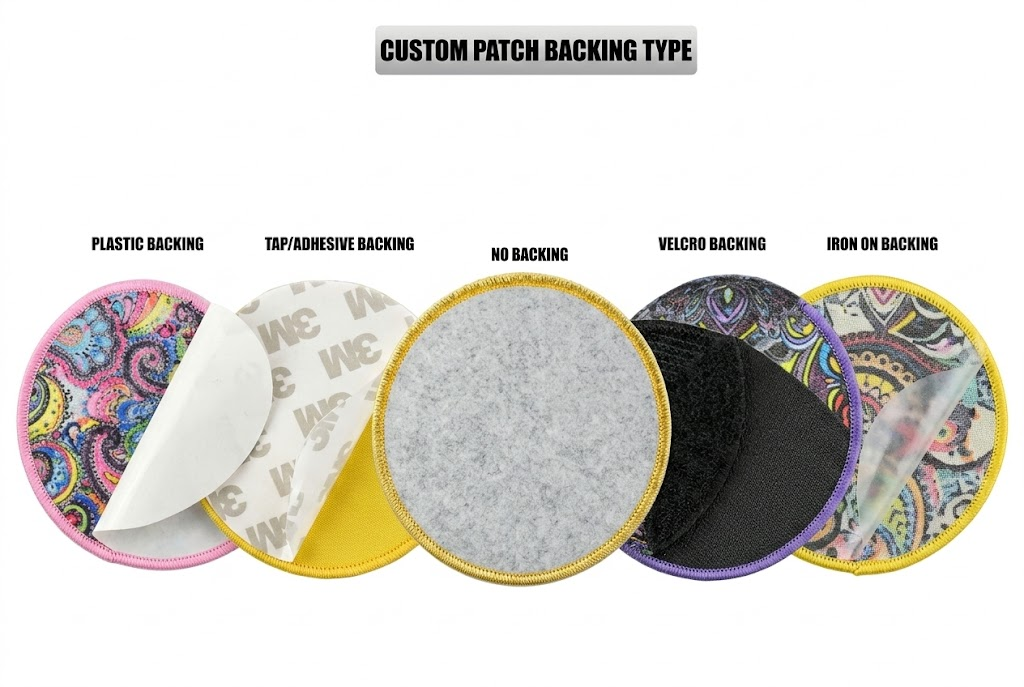
Choosing the best backing for custom patches is one of the easiest decisions to rush, and one of the easiest to get wrong. The patch itself gets all the attention, but the backing decides how it attaches, how long it lasts and whether you can ever remove it. A great design on the wrong backing can peel off after a few washes or be impossible to move later.
There is no single best backing for custom patches that suits every project. The right choice depends on the fabric, how often the item is washed and whether the patch needs to come off. This guide compares the 4 most common options so you can choose with confidence.
Why the Backing Matters
Every patch has a back side, and that side does the real work. When people search for the best backing for custom patches, they are usually trying to avoid one of three problems:
- The patch lifts at the edges after washing.
- The patch damages delicate fabric when applied.
- The patch cannot be removed or swapped when needed.
Matching the backing to the item solves all three before they happen.
Option 1: Iron-On Backing
Iron-on patches have a heat-activated adhesive layer. You press them with a household iron or a heat press, and the glue bonds the patch to the fabric.
Best for: quick applications on cotton and polyester blends, gifts, event items and light-use clothing.
Pros:
- Fast, with no sewing skill needed
- Easy for anyone to apply at home
Cons:
- The bond can weaken on clothing that is washed often or stretches
- Does not hold well on leather, nylon or some waterproof fabrics
- Hard to remove cleanly once applied
For many simple projects, iron-on is the best backing for custom patches because it is so convenient. For heavy-wear items, read the next option.
Option 2: Sew-On Backing
Sew-on patches have a plain fabric back and are stitched around the edge, by hand or by machine.
Best for: uniforms, workwear, sportswear and any item that will be washed often.
Pros:
- The strongest long-term hold
- Works on almost any fabric, including leather and nylon
- Can be removed by unpicking the stitches
Cons:
- Takes more time to apply
- Needs basic sewing or a sewing machine
If durability is your top priority, sew-on is usually the best backing for custom patches. Our full comparison of iron-on vs sew-on patches explains the differences in detail.
Option 3: Velcro (Hook and Loop) Backing
Velcro backing uses two parts: a hook side on the patch and a loop side that is sewn onto the item. The patch simply presses on and peels off.
Best for: patches that change often, such as names, ranks, team roles, event badges and shared uniforms.
Pros:
- Swap patches in seconds
- Reuse the same item with different patches
- Protects the patch from washing, because it can be removed first
Cons:
- The loop side needs to be sewn on the item first
- Adds a little thickness
If you need flexibility, Velcro is the best backing for custom patches, especially for teams and organizations. You can read more about the technology in this overview of hook-and-loop fasteners.
Option 4: Adhesive Backing
Adhesive (peel-and-stick) patches have a sticky back that attaches without heat or thread.
Best for: temporary use, displays, crafts, laptops, bottles and items that never get washed.
Pros:
- The fastest and simplest option
- No tools needed
Cons:
- Not meant for clothing that gets washed
- Holds less firmly than stitching or iron-on on fabric
Adhesive is the best backing for custom patches only when the patch is decorative and the item will not be laundered.
Quick Comparison Table
| Backing | Best for | Durability | Removable |
|---|---|---|---|
| Iron-on | Light-use clothing, gifts | Medium | Difficult |
| Sew-on | Uniforms, workwear, sportswear | Highest | Yes (unpick) |
| Velcro | Swappable names and badges | High (when attached properly) | Yes, instantly |
| Adhesive | Displays, crafts, non-washed items | Low to medium | Easy |
How to Choose the Best Backing for Custom Patches
Answer these four questions, and the choice becomes clear:
- What is the fabric? Leather, nylon and technical fabrics usually need sew-on or Velcro.
- How often is it washed? Frequent washing points to sew-on.
- Will the patch ever change? If yes, choose Velcro.
- Is it temporary or decorative? Adhesive may be enough.
Quick Picks by Item
- Work uniforms: sew-on
- Sports jerseys and jackets: sew-on (see our guide to custom patches for sports teams)
- Caps and hats: sew-on for a lasting hold, or iron-on for light use
- Backpacks and bags: sew-on or Velcro
- Name and rank patches: Velcro
- Display and craft projects: adhesive or iron-on
Does the Patch Type Change the Best Backing?
Yes, a little. Thick chenille patches and heavy PVC patches are better stitched or attached with Velcro, since extra weight pulls on adhesive. Lighter embroidered and woven patches work well with most backings. If you are still deciding on the patch itself, our guide to embroidered vs woven patches can help.
Common Mistakes When Choosing a Backing
- Choosing iron-on for a stretchy, often washed item. The edges lift over time.
- Forgetting the fabric. Leather and nylon do not suit iron-on.
- Ordering the wrong backing for a team. If patches change, plan for Velcro from the start.
- Not asking before ordering. The best backing for custom patches depends on your exact use, so ask first.
Get the Best Backing for Custom Patches With a Free Mockup
At Oceans Patches, we make embroidered, PVC, woven, chenille, leather and sublimated patches with iron-on, sew-on, Velcro and adhesive backing options, and there is no minimum order. Every quote includes a free mockup, and nothing goes into production until you approve it. If your patches do not match the mockup you approved, we remake them at no cost, and if the remake is still not right, we refund you in full.
Tell us what you are attaching the patch to or email sales@oceanspatches.com, and we will recommend the best backing for custom patches in your situation. Ordering a larger quantity? Visit our bulk orders page.
One Response